Alice’s Adventures In Wonderland
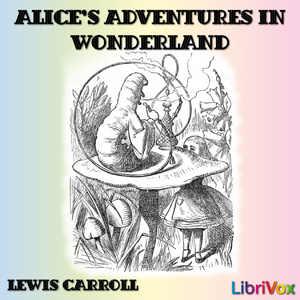
“Alice was beginning to get very tired of sitting by her sister on the bank, and of having nothing to do …” .. and from that moment onward we drift with Alice into another world. When she sees a White Rabbit as it runs through the tall grass (looking worriedly at the watch it takes from its waist-coat pocket), she runs after it and drops into a strange dream. The world is full of chatty animals, from a rather stand-offish hookah-smoking caterpillar to the friendly Cheshire Cat which only sometimes goes to the bother of having a body. And everyone seems to be ordering her about … or telling her to recite poetry! … and all those verses that she once knew so well seem strangely distorted.
In this book and in “Through the Looking Glass”, Lewis Carroll affectionately brought together many of the wonderful stories he told to Alice and her sisters on long summer boating trips.
(Summary by Peter Yearsley)
Слушать “Alice’s Adventures In Wonderland” онлайн, выбирая любую главу.
Скачать аудио-книгу “Alice’s Adventures In Wonderland“. На той же странице слева кликаем на зеленую кнопку “Download”, и закачка начнется автоматически.
Скачать текст книги “Alice’s Adventures In Wonderland” или читать онлайн. Доступные форматы: EPUB, HTML, Kindle, простой текст UTF-8. Вы также можете скачать текст архивом, если кликните на иконку желтой папочки с названием “More Files“.
Краткое описание с сайта shmoop.com:
Lewis Carroll’s Alice’s Adventures in Wonderland and its sequel, Through the Looking-Glass and What Alice Found There, are two of the most famous nineteenth-century children’s fantasy novels. In fact, these books inaugurated a new era of children’s literature in English: books that didn’t have to be didactic or moralistic, that didn’t teach children lessons. Books that simply created imaginative worlds in which children could let their minds roam free. The result was a style of writing that simultaneously embraced nonsense and logic. While other Victorian books for children – likeTom Brown’s Schooldays and the works of Mary Louisa Molesworth and Mary Martha Sherwood – gave rules for living, these books simply provided space in which to live.
Without the curiosity, fantasy, and downright silliness of the Alice books, children’s literature might not have branched out into the world of the imagination. Wonderland and Looking-Glass paved the way for many of the books that children and adults enjoy today – The Spiderwick Chronicles, theHarry Potter series, the Chronicles of Narnia, and so on.
The author of the Alice books, Lewis Carroll (the pen-name of Charles Lutwidge Dodgson) was a shy math professor at Oxford. To entertain three of his favorite “child-friends,” he began telling the stories that eventually developed into the Alice books. Although one of the original audience members was the real-life Alice Liddell, the stories that Carroll composed for her (and her sisters’) amusement have broad appeal for all readers, children and adults, from the nineteenth century until the present day.
The Alice books, sometimes combined or referred to with the abbreviated title Alice in Wonderland, have been adapted numerous times into films (both live action and cartoon), plays, and musicals. The books also provide a rich shared mythology for our culture. Because of the Alice books, Neo can “follow the white rabbit” to discover the truth about the Matrix, the Who can sing a psychedelic song about the White Rabbit, and we can all enjoy the strangely comprehensible nonsense of “Jabberwocky.” Heck, anything that results in an amusement park ride where you get into a teacup is appealing to us.